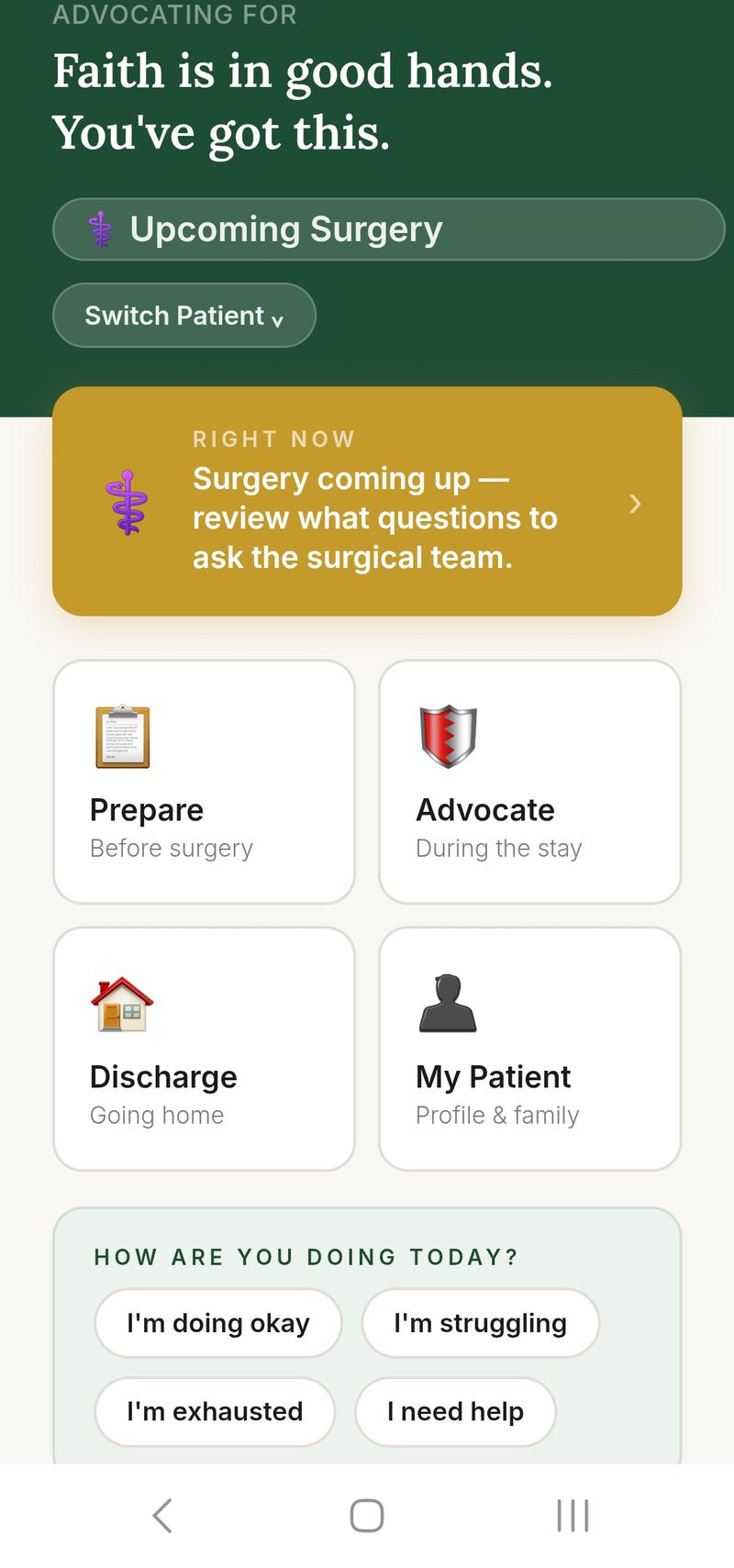
The Advocate App is your guide through the hospital system — what to ask, what to watch for, and how to make sure your loved one doesn’t fall through the cracks.
Not for doctors. For families. Every tool was built around what families actually face when someone they love is admitted.
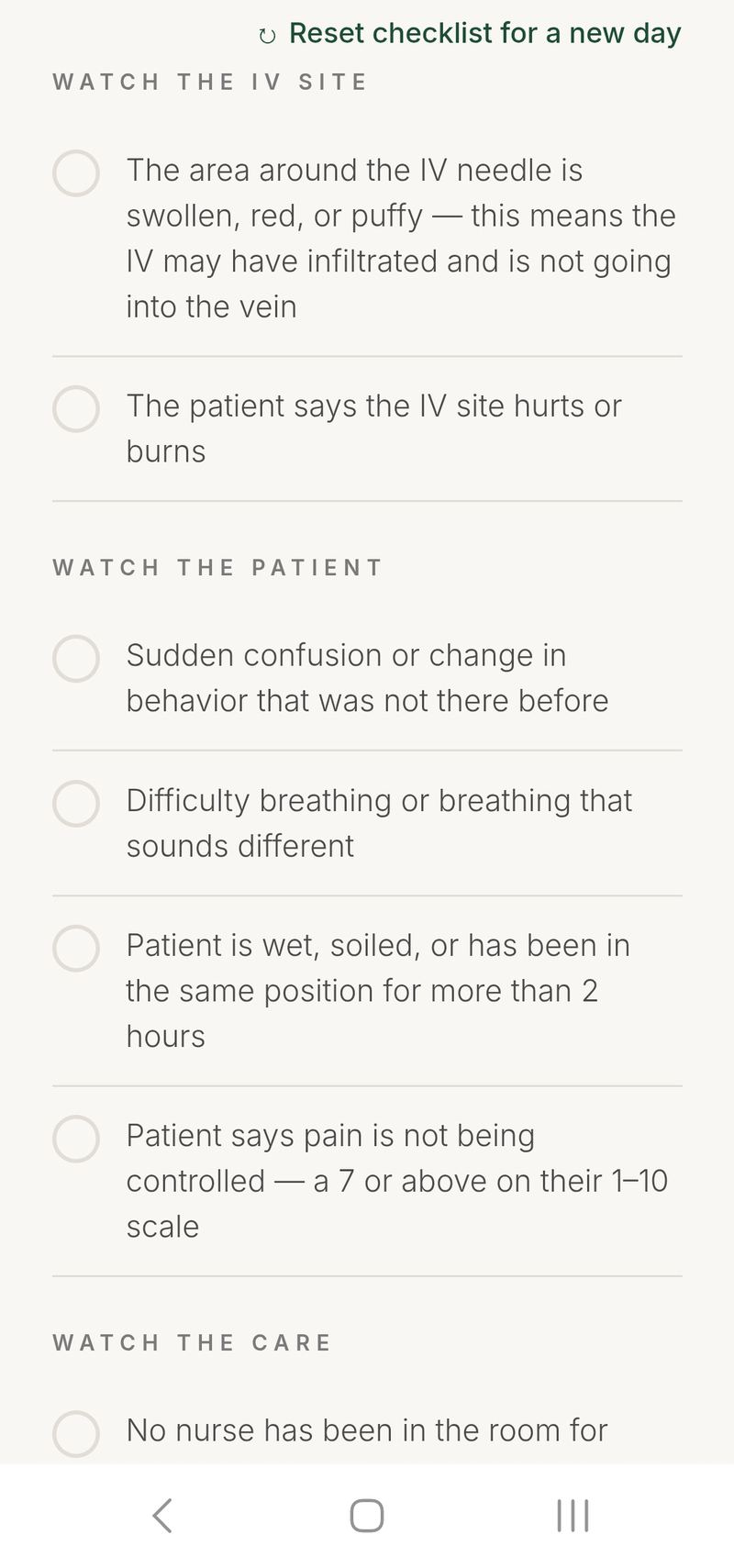
Know what changes in your loved one’s condition mean something is wrong — and exactly what to say to get staff to listen.
Step-by-step guidance when staff isn’t responding or something feels off. Know who to call and how to say it.
Medications, allergies, appointments, family handoffs, and doctor notes — all in one place everyone can see.
Know what to ask before they send your loved one home, what to watch for in the first 48 hours, and which follow-ups to schedule.
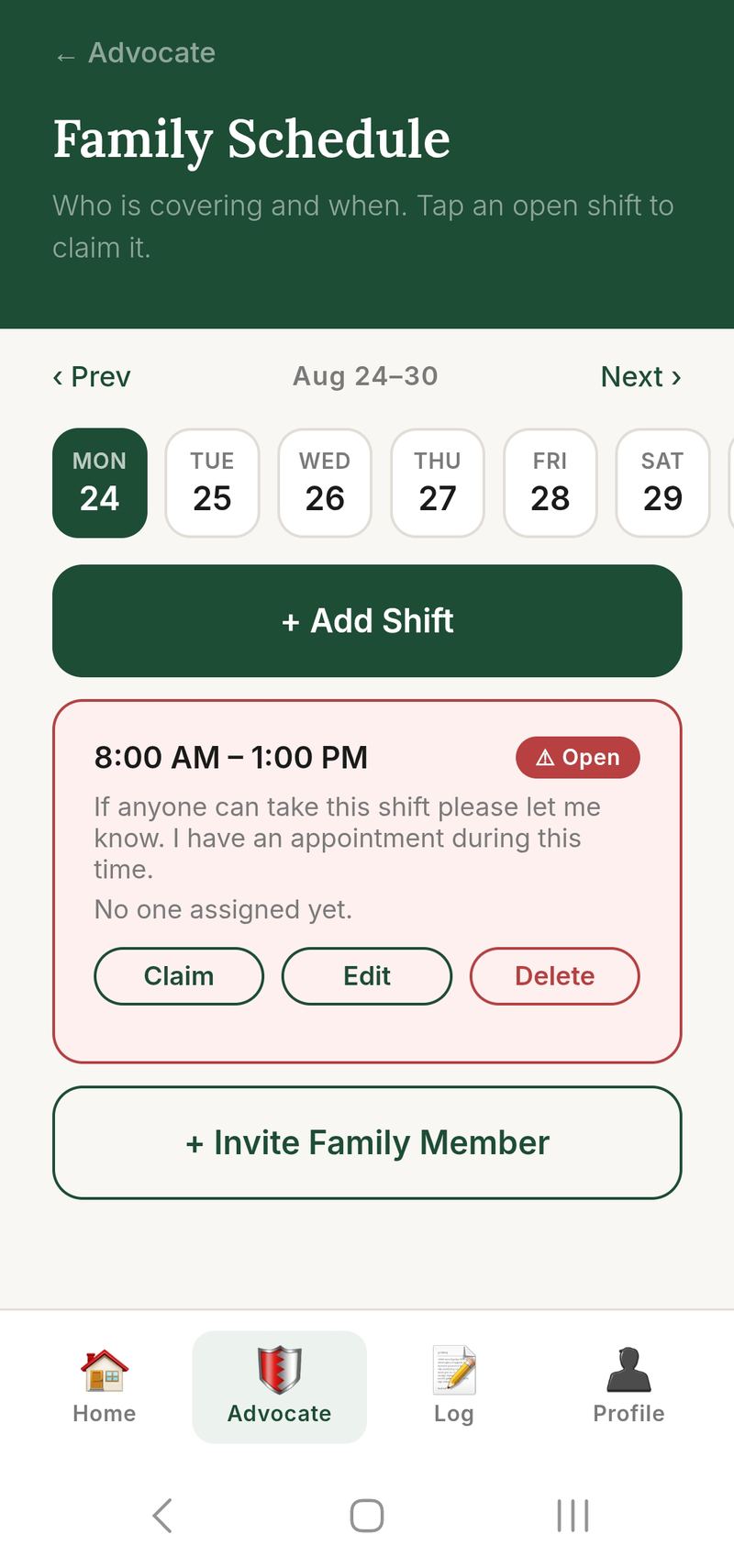
Coordinate who is at the hospital and when. Claim shifts, leave notes, and make sure no one is ever there alone without knowing help is coming.
Leave notes for the next family member so nothing gets lost between visits — medication changes, what the doctor said, what still needs to be asked.
At the ER, admitted, preparing for surgery, or just home — The Advocate App gives you the right tools for where you actually are right now.
Every screen is built around what families actually face. Know what to ask, what to watch for, and who to call if something is wrong.
Invite family members, share the log, coordinate shifts, and hand off notes — everyone sees the same dashboard.
“I had a stroke. My sister Faith is my emergency contact. She is the one who makes my medical decisions when I can’t, and she knows how to do it. Faith is a nursing manager. She knew what to ask, who to call, and when something wasn’t right. We built The Advocate App because most families don’t have what we had. But they should.”
“I’m a nurse — but when my sister Nikki had a stroke, I wasn’t the nurse in the room. I was just family, watching someone I love in need. That’s a different kind of helpless. If we’d had this app that day, I believe it would have eased the stress of an already terrifying moment.”
No tiers. No hidden limits. Choose monthly or save with a full year.
Need to track more than one patient? Add additional patients for only $6.99/month each — managed inside the app.
Call 911 or tell a staff member immediately. Do not wait. Do not look for the right person. Say the words: "This is an emergency."
"What do you think is happening and what are you ruling out?"
"What tests are you running and when will we have results?"
"Is there anything that would change whether they get admitted?"
"Who is the attending physician and how do we reach them directly?"
Create a free account to check items off, keep notes, invite family, and track everything through the whole hospital stay.
Enter the email on your account. We will send a link to reset your password. The link expires after 24 hours.
You'll keep full access to the current patient's dashboard. Starting your own plan just lets you add and advocate for your own patients too.
After you add this patient's profile, you'll be taken to a secure Stripe checkout page to complete the $6.99/month charge.
When a family member logs a note or update, everyone connected to that patient gets a text. No one has to keep checking back in.
When a family member adds a log note, everyone connected to that patient gets a text. Add your number below to receive alerts.
Everything. The Base plan (starting at $9.99/month) includes the Red Flag Checklist, Escalation Roadmap, Patient Log, Discharge Checklist, Family Schedule, Shift Handoff Log, Care Team, Appointments, Patient Rights, and Financial Navigation. There are no locked features.
Yes. Go to My Patient and tap "Add Another Patient." Each additional patient adds $6.99/month to your Base plan.
Yes. Invite them from Manage Family Members — they'll receive an email and will need to create their own account. Once they sign up, they see the same dashboard, checklists, and logs for that patient.
No. The Advocate App helps you organize information and ask better questions. Always follow the guidance of your care team and call 911 for emergencies.
We respond within 24–48 hours
If someone in your life is navigating a hospital stay for a loved one, send them the link below.
Tell a nurse immediately. If the nurse does not respond within 15 minutes, go to the charge nurse. Use the Escalation Roadmap if needed.
You know your loved one better than the staff meeting them for the first time. If something looks wrong, say so clearly and ask for it to be checked.
The "At Home" tab above covers what to watch for once you're settled in.
Families go home expecting home health and find out the nurse cannot come for two or three days. Get every contact before you leave the building.
Call the agency first. If no same-day arrival, call the hospital social worker. If you cannot reach either and there is a medical need that cannot wait, go to the ER.
Get the receiving facility's contact confirmed before your loved one leaves the hospital. Ask what records and medication list will travel with them, and get the name of who will greet them on arrival. Know your rights — you can refuse a transfer to a facility you are not comfortable with. Ask the social worker about other options.
Most are preventable. The first 72 hours are the highest-risk window. This is what to watch for.
The follow-up appointment should be made before the patient leaves the building — not "call us next week." If no one has scheduled it, ask the discharge nurse before you go.
No payment method on file yet. Subscribe below to activate the Base plan for this patient.
Your full billing history and receipts are available in the billing portal. Tap "Manage Billing" below to open it.
Call 911 or tell a staff member immediately. Do not wait. Do not look for the right person. Say the words: "This is an emergency."
"What do you think is happening and what are you ruling out?"
"What tests are you running and when will we have results?"
"Is there anything that would change whether they get admitted?"
"Who is the attending physician and how do we reach them directly?"
You have the right to know what is being done and why. You have the right to ask questions. You have the right to a medical interpreter at no cost. You have the right to refuse any treatment and ask what happens if you do.
Know what is being done and why. Ask questions and get clear answers. Have a medical interpreter at no cost. Refuse any treatment and ask what happens if you do. See your own medical records. Ask for a second opinion.
If pain isn't being addressed, you can ask directly: "What is the plan for managing this pain, and how soon will it take effect?" If the answer isn't good enough, ask for the charge nurse.
If English is not your first language, say: "We need a certified medical interpreter. We understand this is available at no cost." The hospital is required by federal law to provide one — you do not have to rely on a family member or staff member to translate.
"Is this hospital and this doctor in-network for my insurance?"
"Is there a financial assistance or charity care program here?"
"Can I get an estimate of costs before agreeing to a procedure?"
"Who do I talk to about setting up a payment plan?"
Every hospital has one. They can connect you to financial assistance programs and help you understand billing before it becomes overwhelming.
You are not required to pay anything at discharge. Hospitals cannot hold a patient or withhold discharge paperwork over an unpaid bill. If someone tells you otherwise, ask to speak with the hospital social worker or patient advocate.
You can release this shift from the schedule if your plans change.
Escalating is not being difficult. It is advocating for your loved one's safety. Every person on this list expects families to use this process.
Write down who you spoke with, what time, and what they said. Use the Shift Handoff Log to keep a record.